
KopherBit
Commercial EV Vehicle Control Unit

KCU GEN1 Vehicle Control Unit (VCU)

KCU GEN1 is a highly configurable Vehicle Control Unit (VCU) platform for commercial EV applications, electric buses, trucks, prototype vehicles, and specialty vehicle integration.

Discuss KCU GEN1 VCU
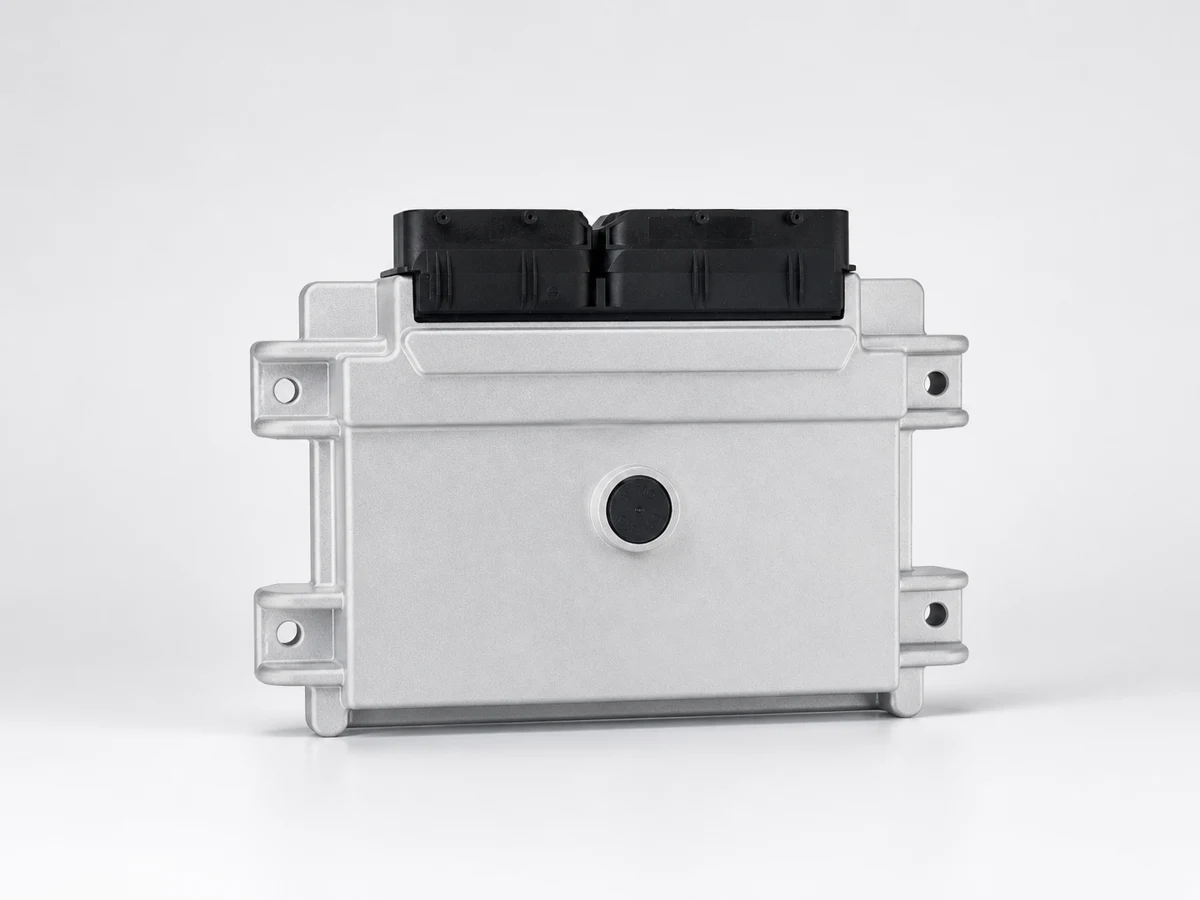
KCU GEN1 Vehicle Control Unit for Commercial EV

Vehicle Control Unit Product Landing Page

What is KCU GEN1 Vehicle Control Unit

KCU GEN1 is a Commercial EV Vehicle Control Unit (VCU) that acts as the vehicle-control core for powertrain coordination, BMS integration, EVCC integration, body control, vehicle networking, diagnostics, and calibration. This product page positions KCU GEN1 as a Vehicle Control Unit, not as a generic controller.

Commercial EV Applications

  • Electric Bus
  • Truck
  • Off-road Vehicle
  • Prototype Vehicle
  • Specialty Vehicle

AUTOSAR-based Architecture

  • AUTOSAR support and modular software architecture
  • Reusable platform architecture for BSW, SWC, RTE, and MCAL workflows
  • Commercial EV ECU and VCU production integration

Vehicle Network Integration

  • CAN / CAN FD vehicle networking
  • Ethernet integration planning
  • UDS diagnostics and XCP calibration
  • OTA-ready software update workflow

Functional Safety and Cybersecurity

  • ISO 26262-oriented functional safety planning
  • ISO 21434-oriented cybersecurity workflow
  • Secure boot, secure update, and diagnostics protection

Powertrain and Energy Management

  • BMS integration
  • MCU integration
  • EVCC integration
  • Charging management
  • Powertrain and thermal-control coordination

Engineering Details

Product Specifications and Engineering Details

KCU GEN1 remains a concrete product page for engineering evaluation, sourcing, and vehicle integration. The following sections keep the control core, I/O, communication, power, mechanical, and automotive-design information visible for users.

Hardware Highlights

High-Density I/O

15 analog inputs, 44 digital inputs, 4 frequency inputs, plus high-side and low-side power outputs.

Vehicle Networking

4 CAN 2.0B channels and 1 LIN Master for BMS, motor controller, body controller, and diagnostic-equipment integration.

Diagnostics & Protection

High-side and low-side outputs support overcurrent, overtemperature, short-circuit, and open-load diagnostics.

Project Configuration

CAN termination, passive components, I/O mapping, and control logic can be adjusted by project need.

Technical Specifications

Specifications

Control Core

Main Processor
NXP MPC5744P
Safety Processor
NXP S32K118
CPU Clock
200 MHz
Memory
2.5 MB Flash / 384 KB RAM
Bootloader
UDS (Unified Diagnostic Services)
Calibration
XCP (Universal Measurement and Calibration Protocol)

Power & Sensor Supply

Supply Voltage
DC 9-36 V for 12V / 24V systems
Sensor Supply
5 channels of 5V sensor supply, 50 mA each
Power Design
Power-management IC and regulators supply the internal circuits

Input Interfaces

Analog Inputs
15 analog inputs with 5V and 36V input-range options
Digital Inputs
44 MSDI digital inputs with Switch to Ground / Switch to Battery configuration
Frequency Inputs
4 frequency inputs up to 20 kHz for 6-36V periodic signals
Wake-up
Selected MSDI / CAN channels support controller wake-up

Outputs & Communication

Low Side Drivers
18 low-side outputs including 4 PWM channels, parallel mode, and diagnostic protection
High Side Drivers
10 high-side outputs including 3 PWM channels, current sense, and open-load diagnosis
CAN
4 CAN 2.0B channels: 3 user channels and 1 debug channel
LIN
1 LIN Master up to 20 kB/s

Mechanical & Environment

Connector
Tyco Electronics 121-pin, Connector A 81-pin / Connector B 40-pin
Housing
Aluminum Alloy 383 (ADC12)
Size / Weight
217 x 143.93 x 41.47 mm, approx. 756.4 g
Temperature
-40°C to +85°C operating / storage
Ingress Protection
IP6K7 / IP6K9K compliance

Software, Diagnostics, and Calibration

  • UDS bootloader supports flashing, diagnostics, and maintenance workflows.
  • XCP supports measurement, calibration, and control-parameter tuning.
  • CAN / LIN interfaces connect BMS, motor controllers, body controllers, and diagnostic equipment.
  • Project-specific I/O mapping, diagnostics, protection strategy, and control logic can be built around the controller.

Automotive Design and Protection

  • Designed around ISO 16750 automotive environmental requirements.
  • Designed around ISO 7637 automotive electrical transient immunity requirements.
  • Designed around CISPR 25 EMC requirements.
  • Supports 0-95% RH non-condensing conditions.

Applications

Typical Applications

Vehicle Control

Acts as a VCU core integrating powertrain, body, energy, and vehicle-network data.

BMS / Energy Systems

CAN and I/O interfaces connect battery status, protection logic, and vehicle control strategy.

Prototype & Test Platform

Build prototype control, I/O validation, HIL testing, and vehicle bench workflows quickly.

Commercial & Specialty Vehicles

Suitable for commercial vehicles, construction equipment, agricultural machinery, and low-speed mobility.

KCU GEN1 Vehicle Control Unit internal links

These links connect the VCU product page with AUTOSAR, EVCC, BCM, automotive AI, diagnostics, cybersecurity, and commercial EV controller topic clusters.

Automotive Product Category

Commercial EV Vehicle Control Unit (VCU)

KCU GEN1 is a highly configurable Vehicle Control Unit (VCU) platform for commercial EV applications, electric bus programs, truck control, and specialty vehicle integration.

Application Scenarios

Electric Bus Truck Off-road Vehicle Prototype Vehicle Specialty Vehicle

System Architecture

  • Commercial EV Vehicle Control Unit (VCU) architecture for commercial EV, ECU, and automotive software integration.
  • Modular hardware, basic software, application software, calibration, and validation workflow.

Communication Interfaces

  • CAN, CAN FD, LIN, Ethernet, UDS diagnostics, calibration, and vehicle-network integration where applicable.
  • Supports integration with VCU, EVCC, BMS, BCM, gateway, charger, and engineering tools.

Functional Safety

  • Designed for automotive engineering programs that consider ISO 26262, diagnostics, monitoring, and fail-safe behavior.
  • Supports safety-oriented requirements traceability, validation, and production integration planning.

Cybersecurity

  • Supports ISO 21434-oriented cybersecurity planning, secure update flow, access control, and diagnostic protection.
  • Can integrate with secure boot, secure communication, OTA, and vulnerability-management workflows.

OTA / Diagnostics

  • Supports UDS diagnostics, flashing, calibration, test automation, and OTA-ready service workflows when integrated with the KopherBit toolchain.
  • Engineering evidence can include traces, reports, network definitions, and ECU validation outputs.

Integration Capability

  • Can be integrated with AUTOSAR, BSW, SWC, RTE, MCAL, BMS, EVCC, BCM, and commercial EV electronics programs.
  • Suitable for OEM, Tier1, prototype vehicle, electric bus, truck, and specialty vehicle engineering workflows.