
Development Tools
Diagnostic, calibration, measurement & simulation
An integrated toolkit for automotive software verification — UDS diagnostics, ECU reflashing, XCP calibration, bus measurement, virtual ECU simulation, and embedded analysis.
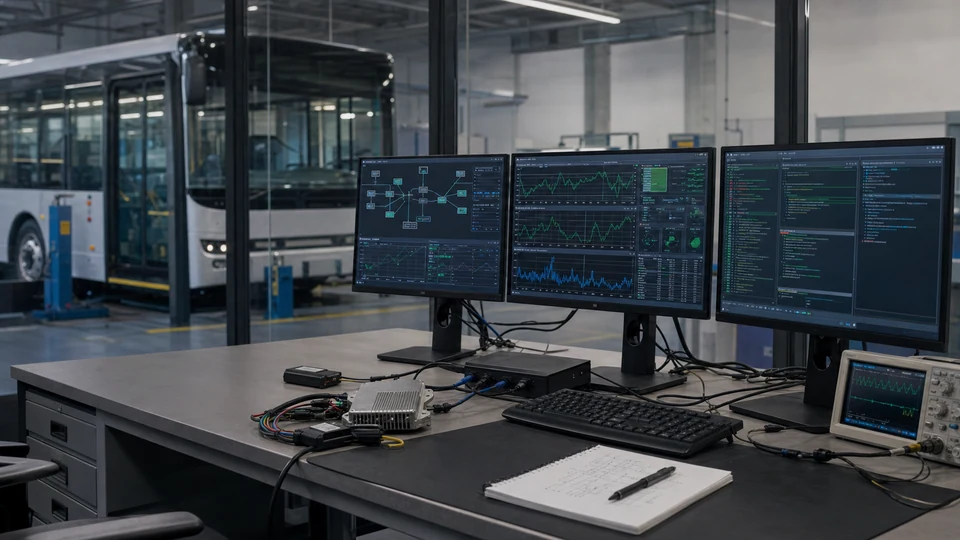
Products & tools
Select tools by project phase and connect design, implementation, and validation through a consistent data flow.
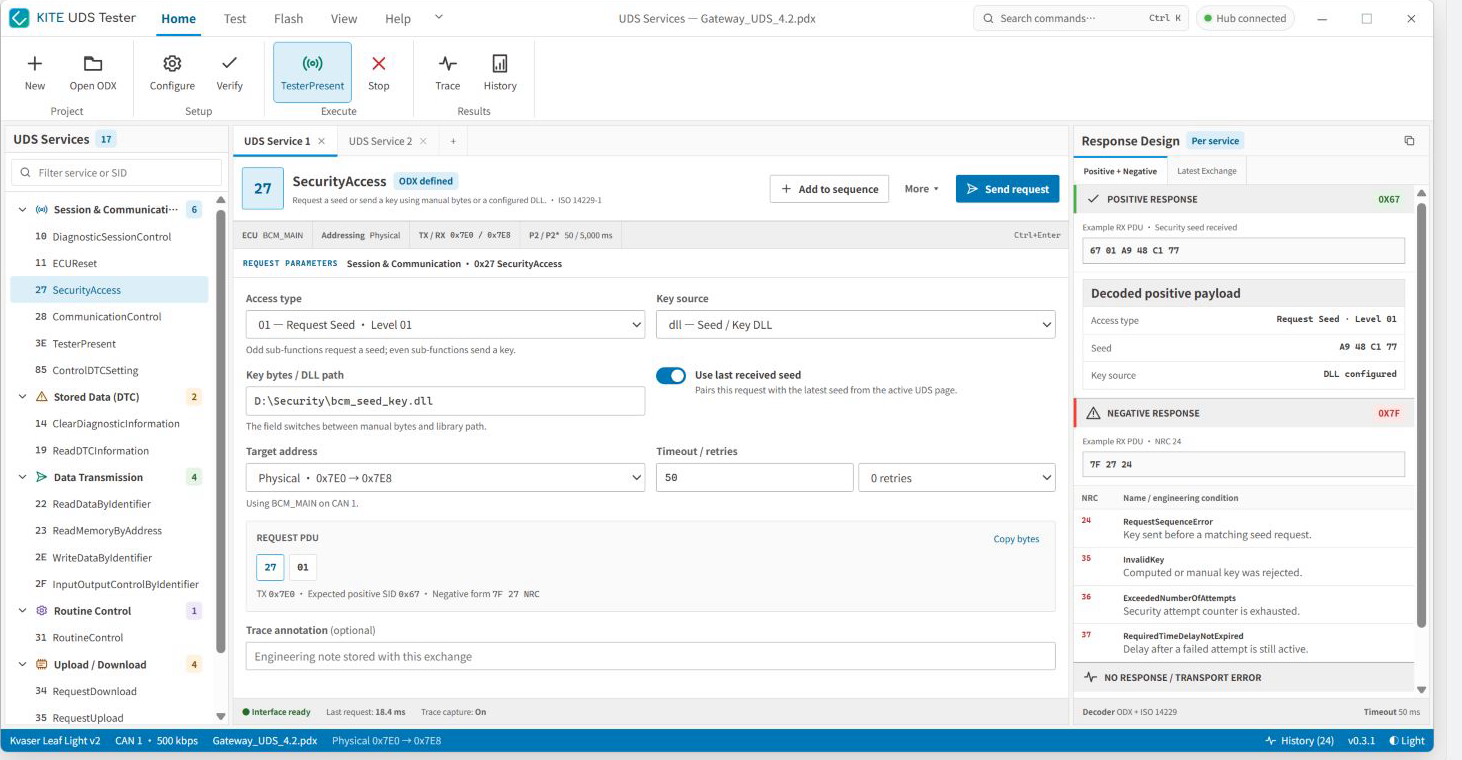
KITE UDS Tester
ReleasedAfter loading PDX, ODX-D, ODX-F, or XML, KITE UDS Tester generates test cases from service, state, timing, positive / negative response, and functional-addressing settings, then runs them in batches, filters failures, and exports trace and reports. The same workbench also covers individual SID operation, SecurityAccess, and ECU programming.

KITE Reflasher
ReleasedStep-driven UDS reflash over CAN with ISO-TP for HEX, S-record, BIN, and VBF firmware, Security Access via DLL, memory-sector merge, CRC verification, sector-info tables, ASC trace, and merged HEX output.
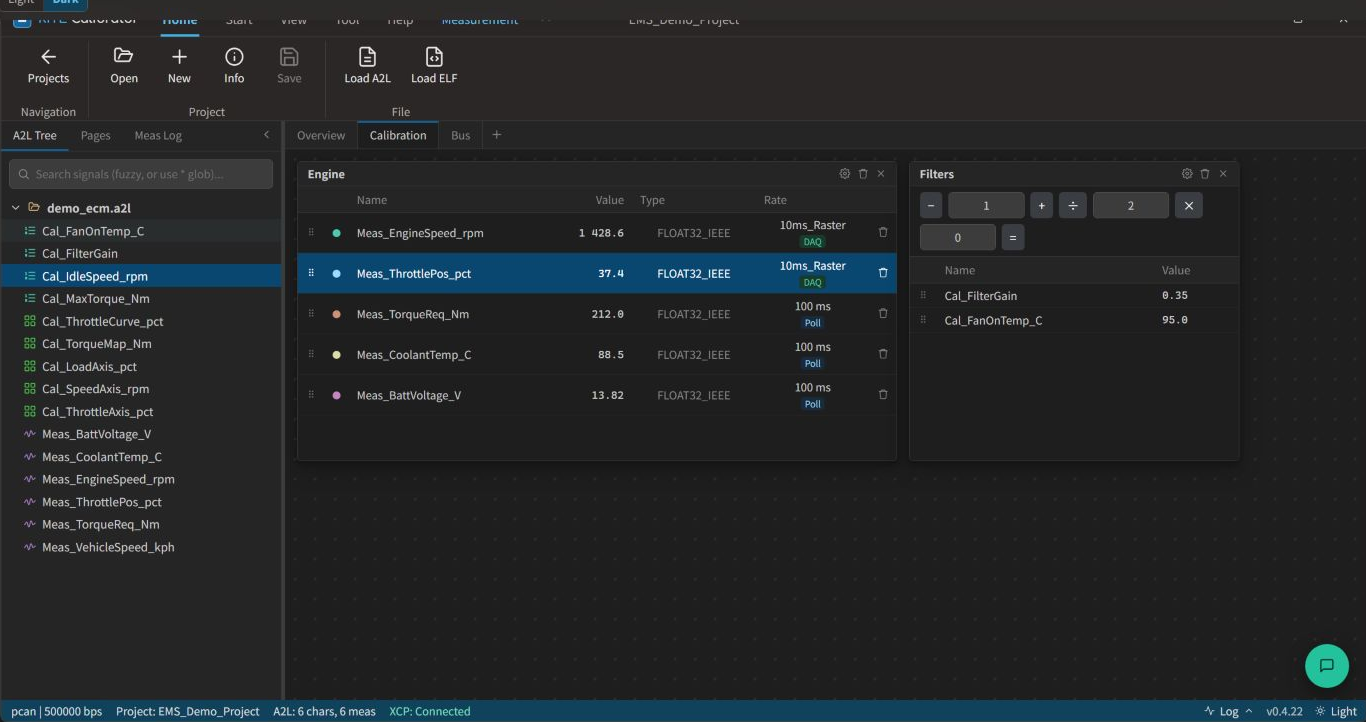
KITE Calibrator
ReleasedBuild reusable multi-page calibration projects from A2L / ELF and combine numeric, graphic, parameter, curve / map, array, DAQ recorder, MF4 playback, CAN / XCP trace, and Par Set Studio workflows across Kvaser, PCAN, Vector, and ZLG CAN interfaces.

KITE Pulse
ReleasedMulti-bus measurement workspace for CAN, CAN-FD, LIN, and Automotive Ethernet with DBC / LDF / ARXML decoding, virtualized trace, WebGL signal charts, SOME/IP service discovery, SecOC freshness, node simulation, and BLF + ZLIB recording.
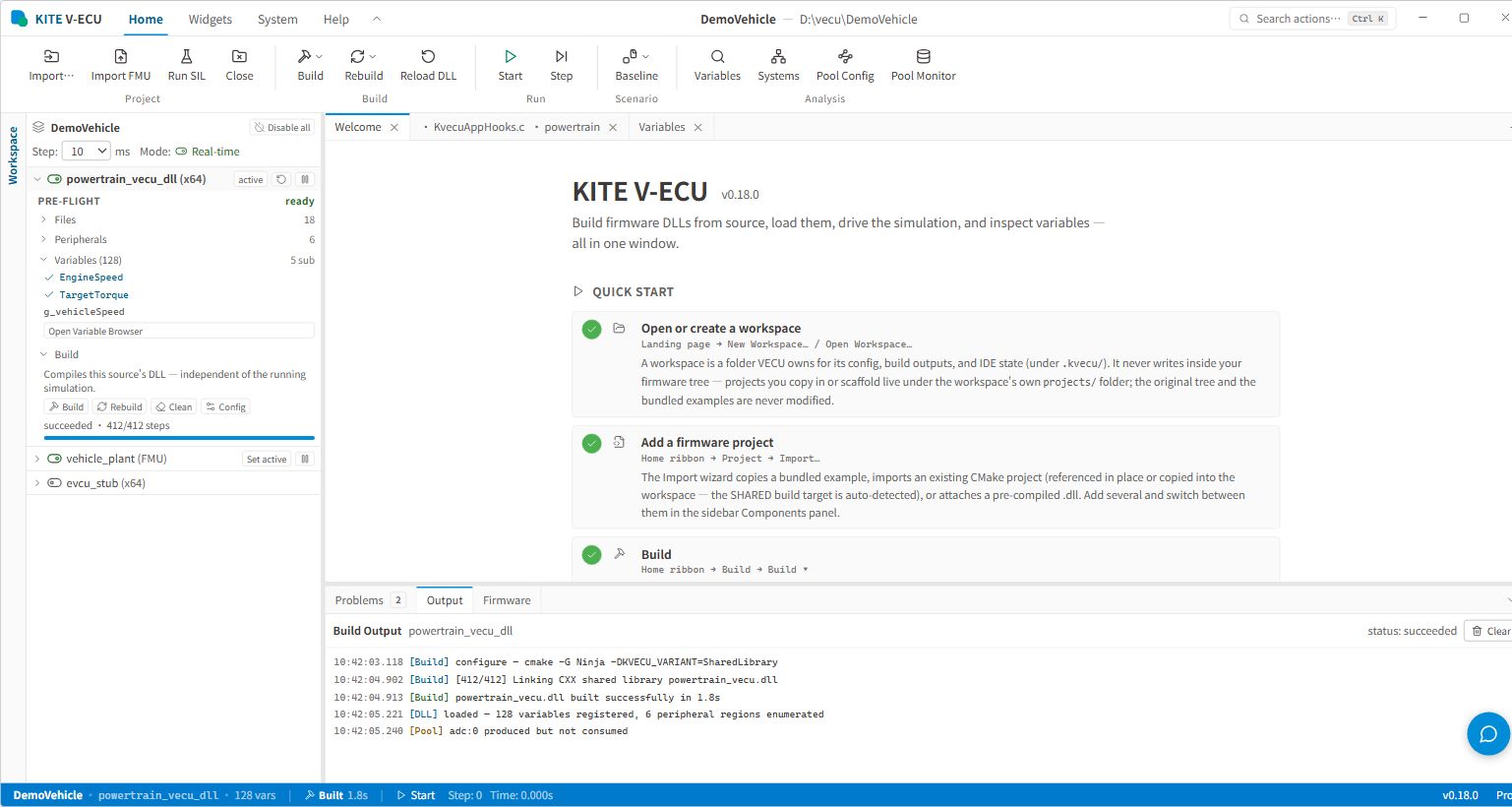
KITE VECU
ReleasedKITE VECU is a virtual ECU and SIL simulation workbench that builds a VECU DLL from an existing CMake project or loads a prebuilt DLL or FMU. Engineers can configure ECUs, scenarios, the Data Exchange Pool, CAN, and peripheral interfaces, then inspect execution through variables, plots, and dashboards.
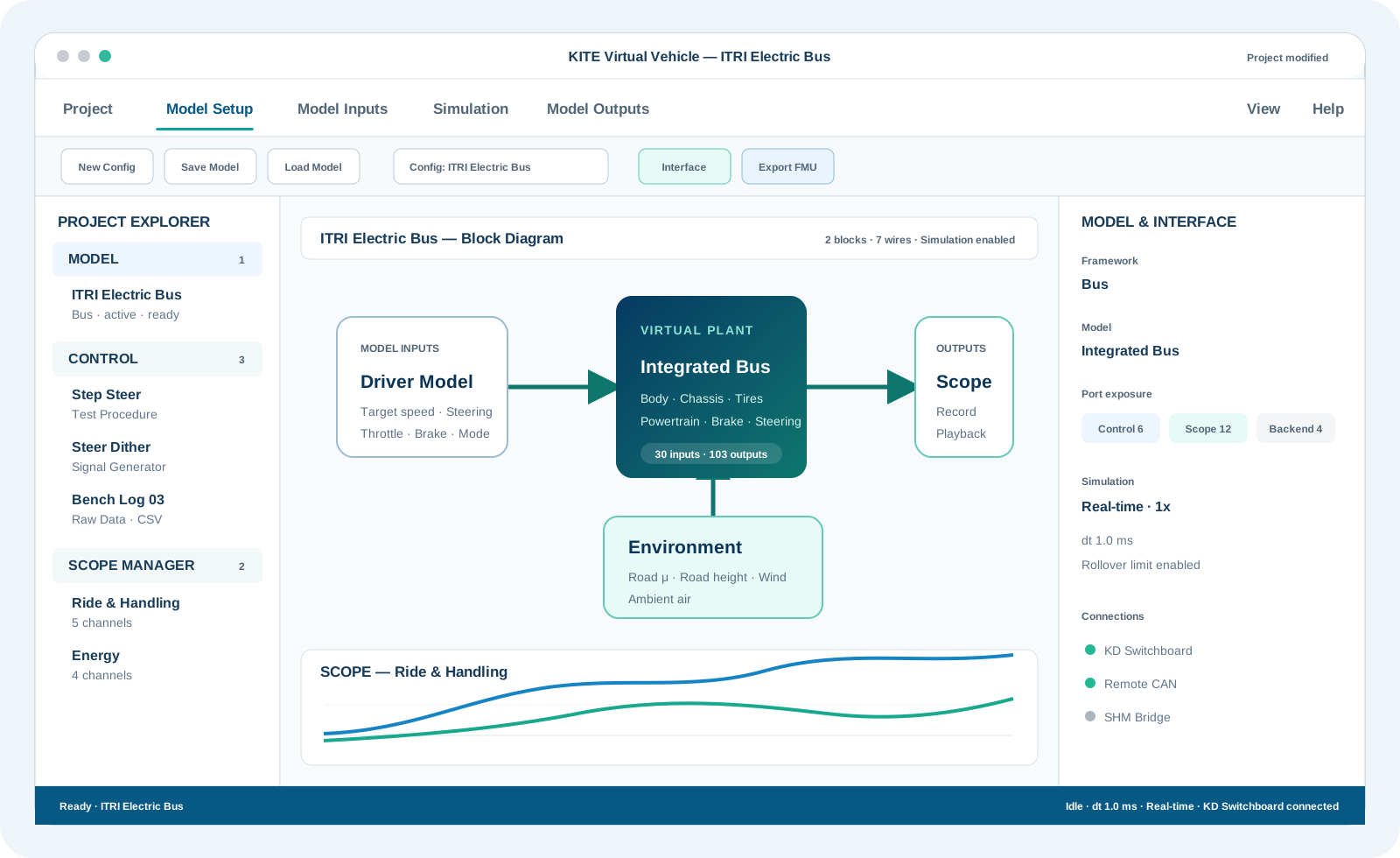
KITE Virtual Vehicle
ReleasedKITE Virtual Vehicle is a vehicle-level virtual plant and model-validation workbench. Engineers select car, bus, truck, two-wheeler, or aerial vehicle frameworks; configure body, chassis, powertrain, braking, steering, and interfaces; connect test procedures, signal generators, raw data, gamepads, Remote CAN, or SHM sources; then run real-time or fixed-step simulation and inspect results through scopes, playback, parameter sweeps, and FMU export.