
Production VCU
KCU GEN1 Vehicle Control Unit
First-generation commercial EV Vehicle Control Unit for electric buses, commercial vehicles, and stable vehicle-control I/O applications.
CAN FDUDSOTACommercial EV
View GEN1Commercial EV Vehicle Control Unit
A vehicle-level control platform for electric buses, commercial trucks, agricultural vehicles, specialty vehicles, and prototypes. The VCU coordinates powertrain, battery, charging, body control, diagnostics, OTA, and in-vehicle networks across different vehicle architectures.
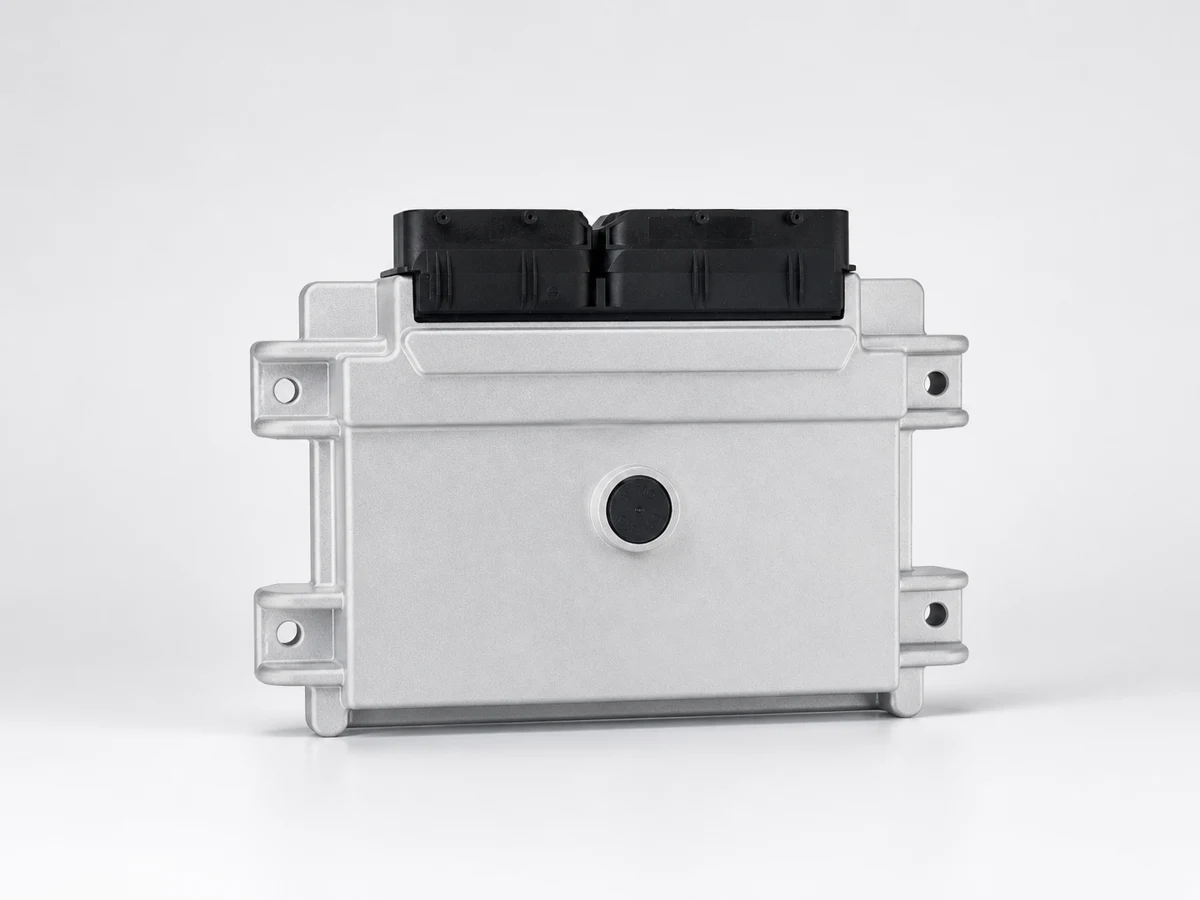
Compare KCU GEN1 and KCU GEN2, then open each product page for hardware specifications, I/O, communication interfaces, and target applications.
First-generation commercial EV Vehicle Control Unit for electric buses, commercial vehicles, and stable vehicle-control I/O applications.
Second-generation high-performance Vehicle Control Unit with TC387, multiple CAN FD channels, Ethernet, and rich I/O for higher-compute control needs.
A VCU is not only a generic I/O controller. It is the vehicle-level control core that manages vehicle states, coordinates ECUs, and keeps behavior predictable during driving, charging, faults, service, and remote software updates.
Manages power modes, Ready, drive, reverse, fault fallback, service mode, and limp-home behavior while coordinating MCU, BMS, braking, and driver inputs.
Integrates BMS, EVCC, OBC, DCDC, and thermal systems for charging interlocks, battery protection, energy distribution, and fleet operation strategies.
Supports CAN, CAN FD, LIN, Ethernet, DBC, ARXML, and cross-ECU signal matrices as the coordination point for vehicle-control data.
Supports UDS diagnostics, DTCs, XCP calibration, reflashing, EOL testing, aftersales service, and production traceability workflows.
Supports secure reflashing, version management, remote update workflows, and recovery strategies to reduce fleet maintenance downtime.
Can integrate ISO 26262-oriented engineering, ISO/SAE 21434, secure boot, secure update, diagnostic authorization, and event traceability under the project safety and cybersecurity plans.
The same VCU category can serve very different vehicles. KopherBit adapts I/O, networking, control logic, diagnostics, and remote maintenance around the vehicle type and operating scenario.
Focuses on uptime, route operation, battery protection, charging schedule, fleet maintenance, and production reliability across BMS, MCU, EVCC, BCM, and telematics.
Supports load variation, long operating hours, torque limiting, energy management, fault fallback, remote diagnostics, and fleet data integration.
Handles low-speed, high-load, outdoor, dusty, and vibration-heavy operation with PTO, hydraulic, work-mode, sensor, and rugged control integration.
Applies to sweepers, utility vehicles, mining vehicles, and port vehicles with custom I/O, body equipment, mission modes, safety interlocks, and remote service.
Fits shuttles, unmanned logistics vehicles, tourism vehicles, and closed-site platforms with low-speed control, sensor integration, monitoring, and fast iteration.
Works as a rapid integration platform that connects existing ECUs, BMS, motor controllers, and test tools from proof-of-concept to production validation.
KopherBit's VCU solution combines controller hardware, automotive software, AUTOSAR engineering, diagnostics, calibration, OTA, cybersecurity, and production validation. For OEMs, Tier 1 suppliers, and fleet integrators, the goal is to build maintainable, traceable, and scalable vehicle-control systems across multiple vehicle programs.
| Vehicle Integration | BMS, MCU, EVCC, OBC, DCDC, BCM, TBOX, and body I/O |
|---|---|
| Communication | CAN, CAN FD, LIN, Ethernet, UDS, XCP, DBC, and ARXML |
| Software Platform | Classic AUTOSAR, BSW, SWC, RTE, MCAL, CAN Stack, and Ethernet Stack |
| Production Engineering | EOL testing, diagnostic data, calibration data, version control, reports, and traceability evidence |
| Safety and Security | ISO 26262-oriented engineering support, ISO/SAE 21434, secure boot, secure update, and diagnostic protection |